Instructional References
Identifying Different Medical Waste Types :
Type of waste :
Description :
Examples :
Biohazardous (Red Bag)
Any solid or liquid waste that is contaminated with blood, human body fluids, or other potentially infectious materials (OPIM), capable of transmitting infection
Gauze, bandages, gloves, gowns, and tubing that are saturated with fluids or caked with dried blood
Sharps
Any device or object capable of puncturing, cutting, or lacerating the skin that is contaminated with blood, human body fluids, or OPIM
Needles, syringes, scalpels, lancets, and auto-injectors
Pharmaceutical
(Non-Hazardous)
Expired, unused, or contaminated medications
Expired or unused over the counter medications, non controlled prescription drugs, expired or unused drugs for pets and livestock
Pharmaceutical
(Hazardous)
Pharmaceuticals that are either listed on the EPA’s P or U lists (both list pure or commercial grade formulations of certain specific unused chemicals as hazardous) or exhibit hazardous characteristics such as ignitability, corrosivity, reactivity, or toxicity
Warfarin, Arsenic Trioxide, Chlorambucil, Cyclophosphamide, Daunorubicin, Diethylstilbestrol, Melphalan, Mitomycin C, Streptozotocin, Uracil Mustard, Epinephrine, Nitroglycerin, Strychnine, and Sodium Azide
Pathological
Human or animal tissues, organs, body parts, and surgical specimens removed during medical, surgical, or veterinary procedures
Human and animal tissues, organs, and body parts removed during surgery or autopsy
Specimens collected during biopsies or other diagnostic procedures, products of conception, surgical remains and, animal carcasses used in research or diagnostics
Trace Chemotherapy
(Trace amounts <3%)
Items contaminated with residual amounts of chemotherapy drugs (<3% of original amount)
Empty drug bottles, drug dispensing devices or IV bags and tubing, empty containers, syringes, and sharps.
Gloves, gowns, masks, goggles and other disposable items used when administering chemotherapy drugs if chemotherapy drugs have not spilled, leaked or dripped on them.
Bulk Chemotherapy
(Bulk amounts >3%)
Any waste contaminated with more than residual amounts of chemotherapy drugs (>3% of original amount)
Chemotherapy drug dispensing devices or IV bags that are not completely empty
Cytoxin (U058), Daunomycin (U059), Melphalan (U150), Mytomycin C (U010), and Streptozotocin (U206).
What containers should be used to dispose of each type of waste :
Type of Waste :
Container :
Description :
Biohazardous (Red Bag)
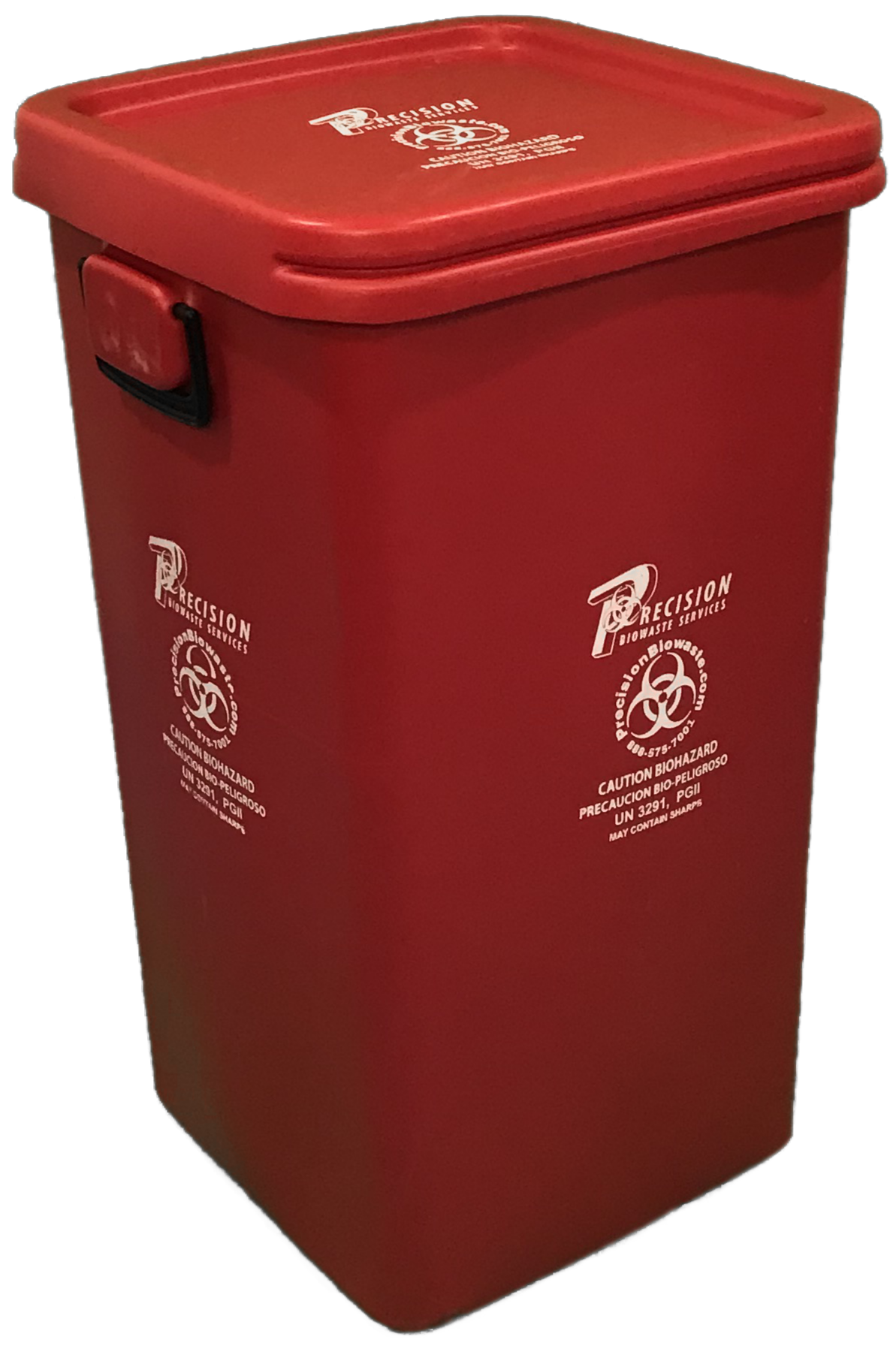
Must be placed in a red biohazard bag that is impervious to moisture, leak-resistant, and labeled for “Biohazardous Waste” The sealed bag must be contained within a red, rigid, leak-resistant, puncture-proof secondary container that has a tight-fitting lid and with the biohazard symbol and "BIOHAZARD" on the lid and all visible sides
Sharps
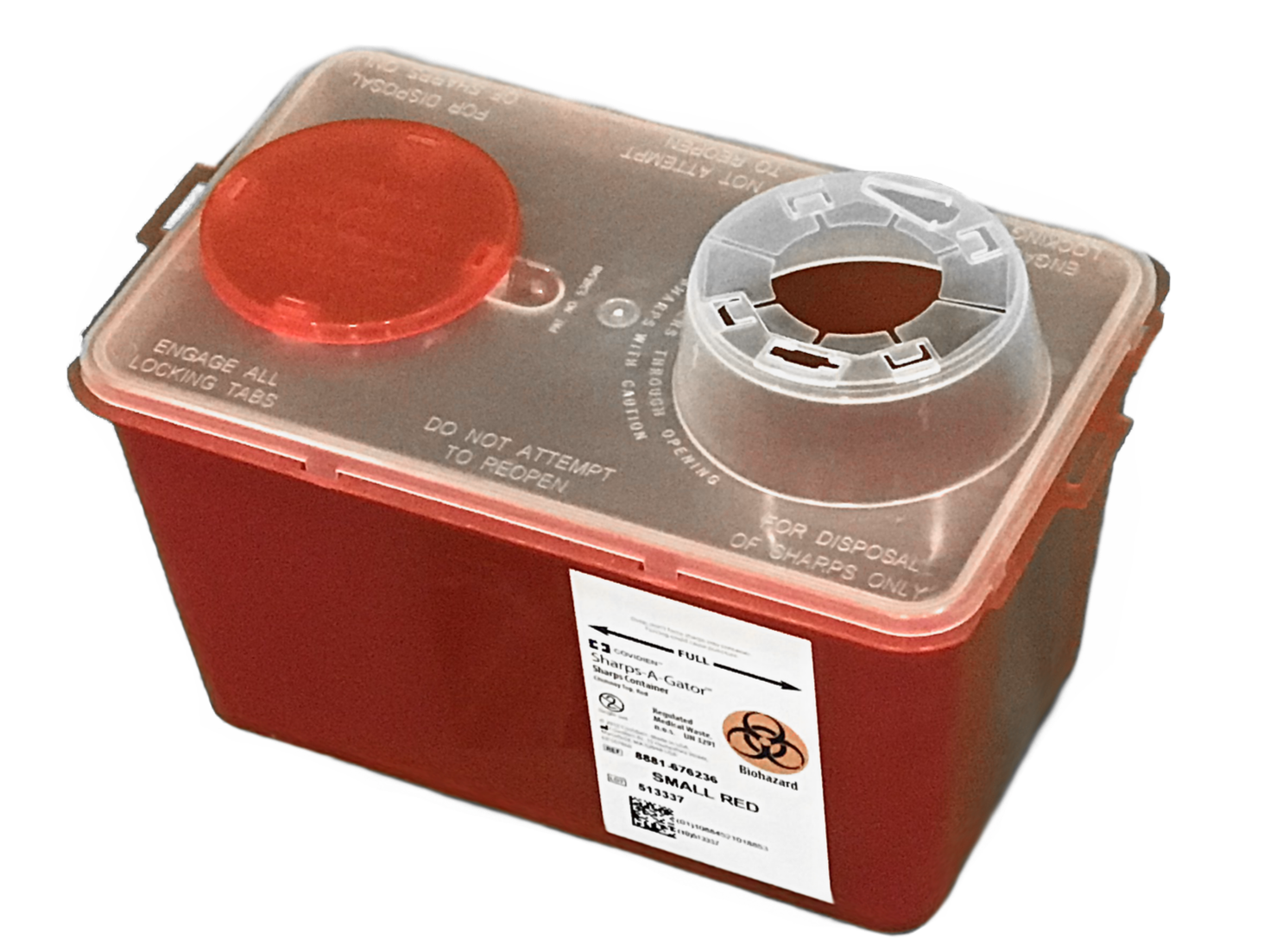
Must be placed in containers that rigid, puncture-resistant, leak-proof, portable, and labeled with the biohazard symbol and “Sharps Waste”
Pharmaceutical
(Non-Hazardous)
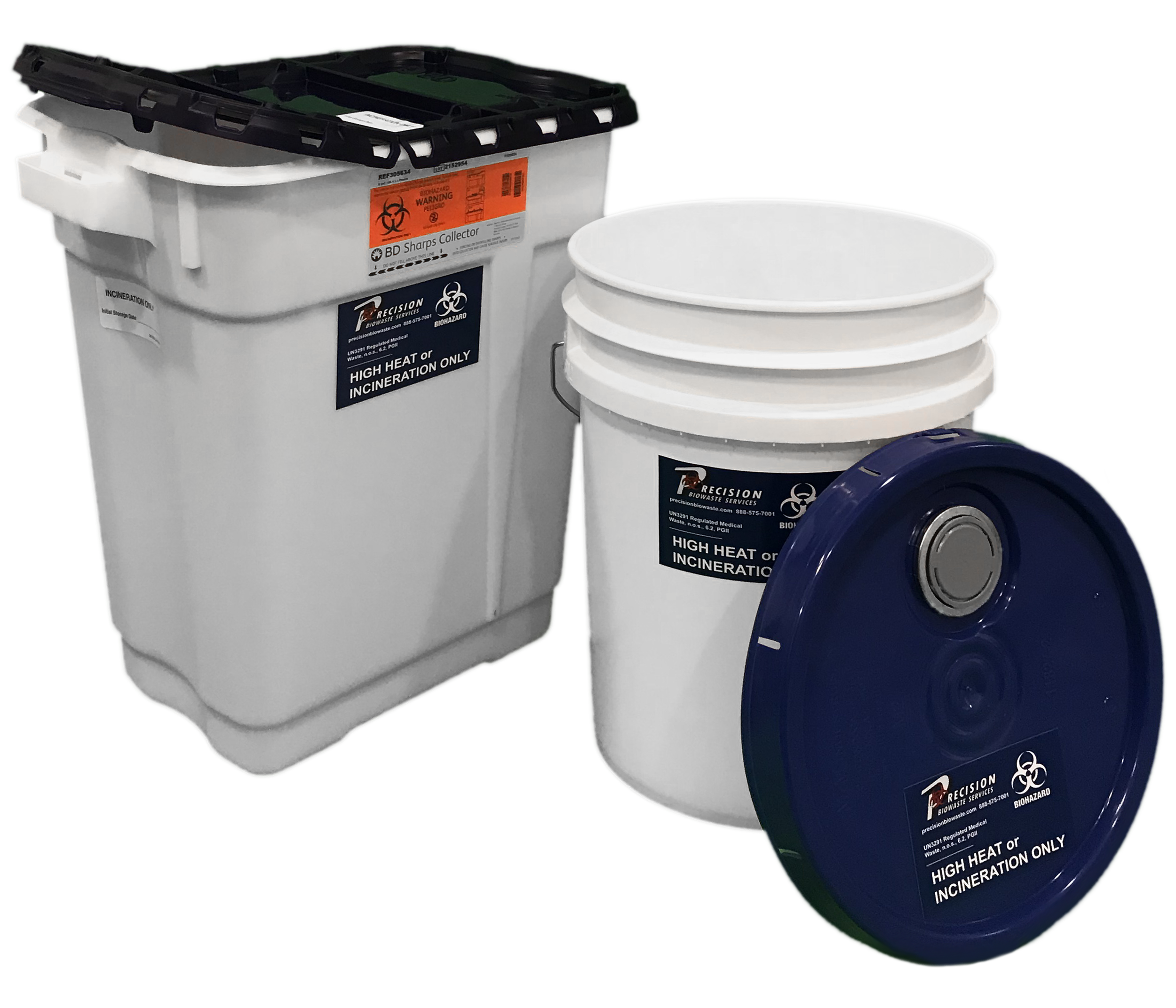
Must be placed in rigid, leak-proof, and puncture-resistant white and blue containers and clearly labeled "Pharmaceutical Waste – Incineration Only" or "Incineration Only."
Pathological
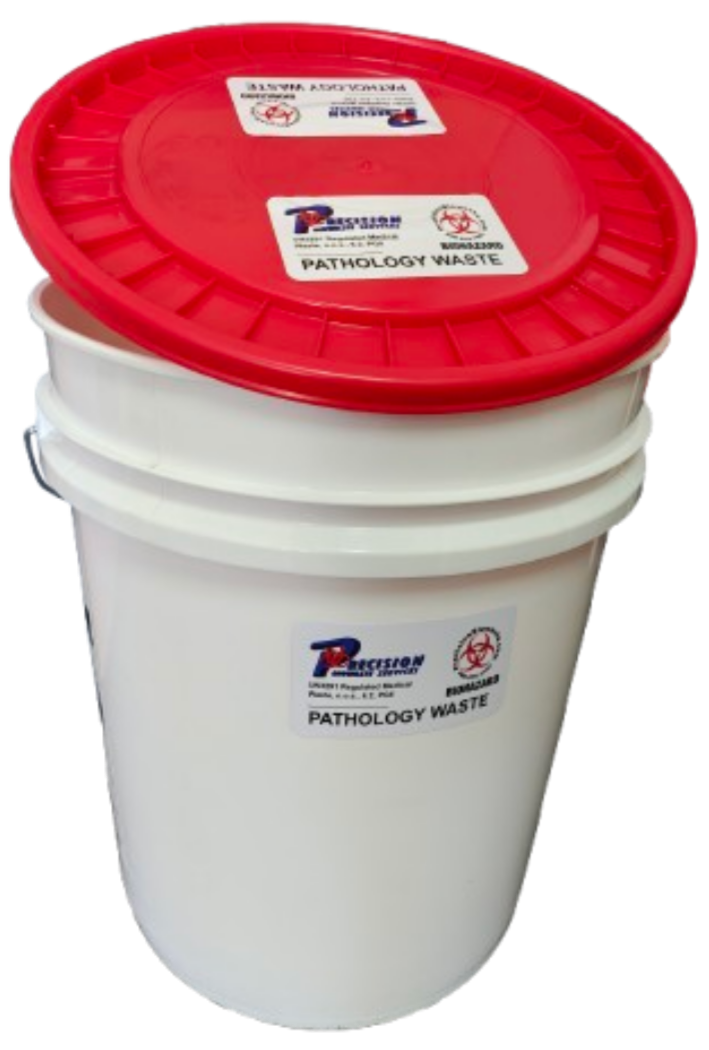
Must be placed in rigid, leak-proof, and puncture-resistant containers. These containers must be clearly labeled with the words "PATHOLOGY WASTE" or "PATH" on the lids and all sides (must be separated from standard “Red Bag” waste
Trace Chemotherapy
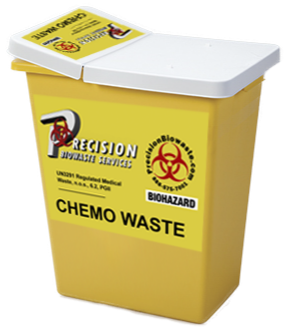
Must be placed in rigid, leak-proof, puncture-resistant yellow containers and labeled "Trace Chemotherapy Waste," "Chemo," or "Incinerate Only"
Bulk Chemotherapy
& Hazardous Pharmaceutical
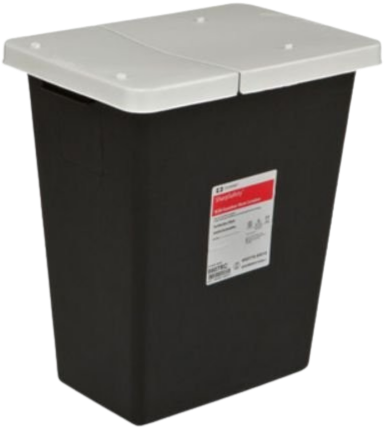
Must be placed in black containers labeled as hazardous waste; these include P-listed and U-listed wastes and must have a Hazardous Waste Label indicating the specific chemical name, percentage, and hazard classifications
What should be done if a biowaste spill occurs at your facility and what supplies you should have :
Supplies needed:
Caution tape (preventing exposure to others)
Nitrile gloves
Puncture resistant, thick rubber gloves
Dustpan with broom
Disinfectant spray/bleach
Absorbent
Paper towels/disinfectant wipes
Sharps container if any Sharps spilled
Biohazard container
1) Identify Spill Area
2) Section off around spill area with caution tape or other means to create perimeter around the spill area
3) Put on puncture resistant gloves over nitrile gloves
4) Sweep up solid waste material using a dustpan and broom
5) Dispose of it into a sharps container
6) Secure lid of sharps container for transport
7) If any liquid has spilled, apply disinfectant spray or bleach to all liquid
8) Spread absorbent to the entire spill area
9) Sweep up absorbent material
10) Dispose of absorbent into a Red Bag container
11) Clean the affected area with disinfectant spray and towels or disinfectant wipes
12) All towels/wipes, gloves, dustpan, broom along with anything used to clean the spill are to be disposed of into a Red Bag container
13) Secure the lid of the Red Bag container for transport
14) Fill out a Biowaste Spill Form, in compliance with your company policy, to record the details of the spill
LARGER SPILLS, OR THOSE INCLUDING OTHER HAZARDOUS MATERIALS, MAY REQUIRE DIFFERENT RESOURCES AND PPE FOR EFFECTIVE CLEANING AND SAFETY.
Please reach out to us if you have any questions about Medical Waste and its proper disposal.